

$19.99


How to Keep Your Dog From Jumping the Fence: 10 Ways
By: Jeff Smith
November 06, 2026
15 MINS READ
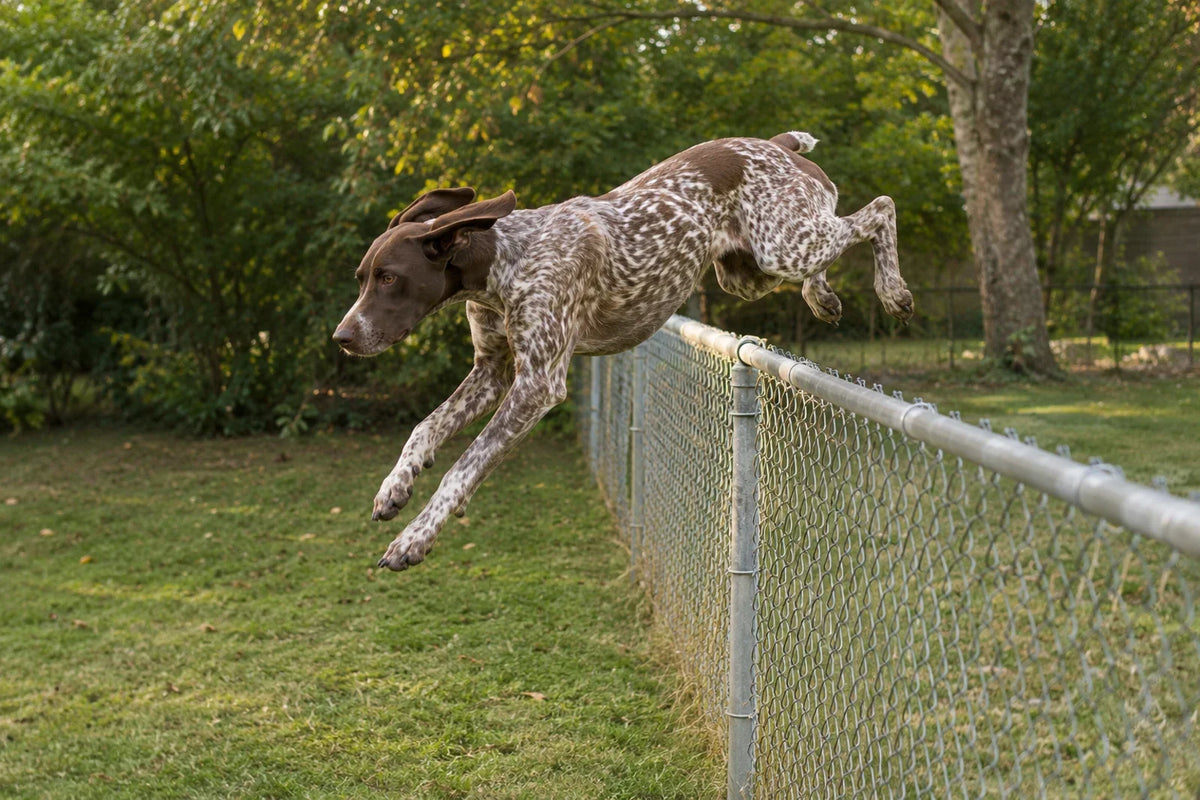
To keep your dog from jumping the fence, make the fence harder to get over and fix the reason your dog wants out. Until you've done both, don't leave your dog in the yard alone.
I've had 3 dogs over the last 19 years, and every one of them tested our fence. Juno, my 3-year-old German shorthaired pointer, is the one who beat it. She got over our 5-foot chain-link fence 11 times in her first year with us, and twice I found her on the county road out front.
I tried 8 of the 10 ways below before anything held. What finally kept Juno home was a GPS dog fence, used with a few of the cheaper fence fixes. She still tests the back corner now and then, but she hasn't been past her boundary since March.
Here are the 10 ways, starting with the GPS dog fence that alerts your dog to turn back at a boundary you draw.
10 ways to keep your dog from jumping the fence
1. Use a portable GPS dog fence
A portable GPS dog fence is a wireless dog fence built into a collar. It uses satellite positioning to work out where your dog is against a virtual boundary you draw in an app, so there's no buried wire or base station to install.

When your dog crosses the boundary, the collar gives an alert, such as a sound or a vibration. The alert stops as soon as your dog comes back inside. With consistent training, it helps your dog learn where the line is. It works best on open ground with reliable GPS reception.
That boundary was the missing piece for Juno. She didn't know where her yard ended, and to her the fence was just something to get over.
I tried two other GPS dog fences first. One felt cheap, and the other needed a monthly subscription just to keep the fence running, which got old fast. I settled on PawTronic. If you're comparing systems, our best GPS dog fence guide covers boundary options, subscriptions and multiple-dog setups.
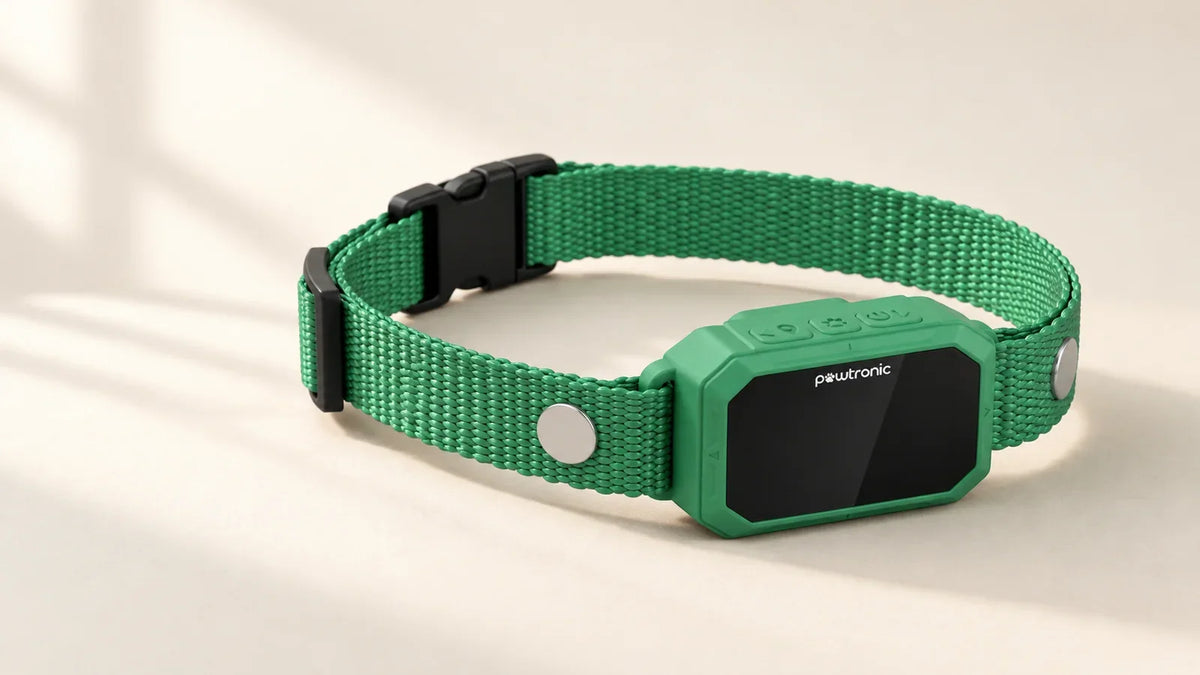
The PawTronic Pro Series 2 sets up in a free app with no monthly fence subscription. The collar saves up to six boundaries, like your home and a barn, so it goes where your dog goes.
Draw the boundary in one of 2 places:
- A few feet inside your fence, as a buffer zone. If GPS places the boundary accurately in your yard, the alert can start before your dog reaches the fence. That takes away the running start. Ask PawTronic's team how far inside to draw it, walk-test it first, and use sound or vibration only for this placement.
- Between your fence and the road or woods, well short of the road, as a second boundary. If your dog clears the fence, the alert can still turn them back before the road. Use this placement for a dog that still gets over.
I drew Juno's boundary around our whole 2-acre lot, about 40 feet short of the road, so the fenced backyard sits well inside it. For the first two weeks I used sound only, with PawTronic's training flags along the line, and walked her on a leash for 10 minutes morning and evening.
She went over the fence twice in that time, and both times she stopped at the beep and came back up the driveway. The one snag was the big oak by the shed, where the line drifted a few feet, so I pulled that corner in.
Owners on the PawTronic page say their dogs learn the boundary:
- Trained in a couple of days: on 4 acres beside dense woods, the owner says the collars keep a German shepherd and a terrier mix out of the woods and pastures.
- Learned in 2 to 3 days: an owner by a road says their puppy, which had started wandering a little too far, learned the boundary that fast.
- Turns back at the beep: another owner says their dog quickly understood the property boundaries and turns around as soon as it hears the beep.
2. Install coyote rollers
Coyote rollers are tubes along the top of the fence that spin when an animal tries to climb over. The manufacturer says this denies animals the traction to get over. They suit a dog that grabs the top and pulls themselves up.

RSPCA Australia suggests a similar roller bar: a smaller PVC pipe inside a larger one, hung above the fence.
3. Add an inward-angled extension
Humane World for Animals recommends an inward-angled extension for dogs that climb or jump. It doesn't need to make the fence much higher, as long as it tilts inward at about 45 degrees.

Keep launch pads away so your dog can't reach the new top, and have a fence installer check how it attaches to your fence.
4. Move launch pads away from the fence
A chair, bin, woodpile or doghouse beside the fence gives your dog a raised starting point. A 3-foot doghouse beside a 5-foot fence leaves your dog only 2 feet to clear.

Humane World for Animals recommends keeping tables, chairs, doghouses and similar structures away from the fence. If something can't move, like steps or a raised bed, block your dog's access to it. When you move something, check that its new spot doesn't give your dog another way up.
5. Block the view where your dog reacts
If passing people, dogs or wildlife set off the escapes, block your dog's view with privacy slats, reed screening or solid panels. Start where your dog reacts, not along the whole fence.
Check with your fence's manufacturer or a fence installer that the fence can hold it. Secure it so it has no loose edges or new footholds. Screening blocks what your dog sees, not what they hear or smell, so keep up recall training too.
6. Add an inner buffer to stop the running start
RSPCA Australia suggests a shorter inner fence two to three feet inside the main one, with shrubs planted in between, to create a buffer zone.

I'd start with the stretch where your dog goes over. If you'd rather not build one, a GPS dog fence boundary inside your fence alerts your dog in that zone instead. Our guide to keeping your dog in the yard without a fence compares other containment options when you cannot add a physical barrier.
7. Raise the fence only for a clean jumper
Try an inward-angled extension first, and save extra height for a dog you've seen clear the top without climbing. Check your HOA rules, your city's fence-height limits and whether your posts can take the extra height. I wouldn't pick a height by breed or size alone.
8. Stop your dog digging under the fence
If your dog digs out, a taller fence won't help. Humane World for Animals suggests 3 fixes at the base of the fence:
- Bury chicken wire along the base, with the sharp edges rolled inward.
- Put large rocks along the bottom.
- Lay chain-link fencing flat on the ground along the fence line.

Repair loose panels and gaps at the same time, and make sure the gate latches.
Whichever fence fix you use, avoid spikes, barbed wire and exposed sharp edges, check the fence after each change, and don't encourage your dog to test-jump it.
9. Burn off your dog's energy
If boredom or social isolation is the reason, try these 4 ideas from Humane World for Animals:
- A walk every day.
- Interactive play, like fetch.
- Interesting toys, rotated so they seem new.
- Short training sessions every day.
Add food puzzles and sniffing games too, matched to your dog's age, health and fitness rather than trying to wear them out. Then watch whether your dog plays or drifts back to watching the fence.
10. Train a reliable recall
Recall (coming when called) lets you call your dog off the fence before they climb or jump. The American Kennel Club advises starting with few distractions, always rewarding your dog for coming and making it harder slowly. Build it in 3 stages:
- Indoors. Practice your recall cue, and reward your dog every time they come.
- In the yard, away from the escape spot. Call your dog before they lock onto something beyond the fence, and reward the return. If they can't respond, practice farther from the fence.
- Near the fence. Reward your dog whenever they turn away from the fence on their own, then start a game.
A dog that comes back indoors may not come back when a squirrel runs past, so keep the route closed while you train.
Never punish your dog for coming back, even after an escape. Humane World for Animals warns that punishment can make them afraid to come to you.
How do I keep my dog safe while I fix the fence?
Supervise every yard visit until your fixes hold. Follow these 3 rules:
- Stay outside with your dog, close enough to call them away before they reach the fence. Watching from a window leaves you too far away to step in.
- Hold a long line, never a tie-out. Whole Dog Journal warns that a dog left on a line can get tangled, causing sprains, broken bones or strangulation.
- Keep your dog indoors when nobody can watch, or arrange a dog walker or sitter.
Why does my dog keep jumping the fence?
What happens right before each escape points to one or more of these 6 reasons. Humane World for Animals says fence fixes won't be nearly as effective until you understand why your dog wants out.
| Reason | What you'll notice | What to do |
|---|---|---|
| Boredom or social isolation | Long stretches alone in the yard with little to do | More walks, play and training together |
| Chasing animals | Escapes start when a cat or squirrel appears | Recall training |
| Passing people or dogs | Your dog rushes the fence when someone walks by | Screening where your dog reacts |
| Fear of loud noises | Escapes happen during storms, fireworks or nearby construction | Bring your dog inside before the noise starts, with a safe place to retreat. See your vet if the fear persists. |
| Separation distress | Escapes start soon after you leave, along with other signs of distress | Keep your dog indoors when you go out, and ask your vet for an assessment and a behavior plan |
| Looking for a mate | Your dog isn't spayed or neutered and roams when potential mates are nearby | Ask your vet about spaying or neutering |
Treat these as clues. Note when attempts happen, what your dog reacts to, and whether anything changes when someone stays nearby.
Escaping while you're away doesn't prove separation anxiety on its own. A fence fix closes the route, but it won't treat fear or separation distress.
How can I tell how my dog is getting over the fence?
Check the spot where your dog gets out, plus any camera footage you have. Don't recreate the escape to test it. Then match what you find to the fix that fits:
| What you find | Fix to try | Also work on |
|---|---|---|
| No scratches and nothing to jump from (a clean jump; confirm it on camera) | Inward-angled extension, or a taller fence | What sets off the jump, and recall near it |
| Scratches or paw marks on mesh or rails (climbing) | Inward-angled extension | Calling your dog away before they start to climb |
| A chair, bin or doghouse near the escape spot (jumping off it) | Move launch pads | Watching for a new route during supervised yard time |
| You've seen your dog grab the top and pull up (pulling themselves over) | Coyote rollers | Recall, so you can call them off before they reach the top |
| You've seen your dog sprint at one stretch before going over (a running start) | Inner buffer, or a GPS dog fence boundary inside the fence | What they're running at: screening if it's people or dogs |
| Fresh digging, a loose panel or an open gate (another way out) | Digging fixes, repairs and a gate that latches | More exercise and play, if boredom drives it |
Your dog may use more than one route, so check the whole fence line.
Which fix works best for my type of fence?
Match the fix to your fence: an angled extension for chain-link, a top rail if it has none, boards or rollers over wood rails, and no launch pads near smooth fences.
| Fence type | Weak point | Fix |
|---|---|---|
| Chain-link | The mesh gives paws a grip, and the fence can flex, according to Whole Dog Journal | An inward-angled extension or a smooth panel over the stretch your dog climbs. Privacy slats also block the view |
| Chain-link with no top rail | The top can bend under your dog's weight, according to World Animal Foundation | Add a top rail |
| Wood with rails on your side, including "good neighbor" fences | The horizontal rails work like steps | Cover the rails with a smooth board, or add rollers on the stretch your dog climbs |
| Solid wood | Fewer footholds than chain-link, but Whole Dog Journal says determined climbers can still get a grip | Move launch pads, and add rollers where your dog climbs |
| Vinyl | Slippery enough to make climbing difficult, according to Whole Dog Journal, so dogs clear it or use a launch pad | Move launch pads, then an extension for a clean jumper |
What's the cheapest way to keep a dog from jumping the fence?
Moving launch pads is free, and recall practice only needs treats you already have. Past that, most fence fixes cost more the longer your fence is.
Use these figures to compare the main costs. Hardware prices below are standard prices without promotional discounts; materials and installation vary with the length of your fence and the work required.
| Fix | Typical cost |
|---|---|
| Move launch pads | Free |
| DIY PVC rollers | Materials only; cost depends on the pipe, brackets, hardware and fence length |
| Straight height extension kit, up to 3 ft taller | $599.98 for a 100-ft poly mesh kit, before installation |
| New installed chain-link fence | $2,057 to $5,092 for a typical project, across 1,408 installs, according to Ergeon (2026) |
| PawTronic Pro Series 2 GPS dog fence | $578.99 standard price for one collar, with no monthly fence subscription |
Unlike the fence fixes, a GPS dog fence's price doesn't grow with the length of your fence line, which is why it suits large, open properties. It works alongside your fence.
Can a GPS dog fence stop a dog from jumping the fence?
A GPS dog fence can help discourage fence jumping by alerting your dog at a virtual boundary and reinforcing that boundary through training. It works alongside a physical fence; it does not physically prevent a jump. Where you draw the boundary determines whether the alert starts before or after your dog reaches the fence.
Three things make it work for a jumper:
- Pair it with recall training. A dog chasing a squirrel is the hardest test for any boundary, so keep your physical fence and keep practicing recall.
- Move the boundary beyond the fence if your dog still gets over. With the boundary inside the fence, a dog that clears the fence can't get back inside the boundary to stop the alert. Use sound or vibration only while you try that placement. If your dog gets over even once, draw the boundary beyond the fence, so they can wait between the fence and the boundary without an alert.
- Test the boundary under trees and near buildings. GPS reception is weaker there. Walk-test the boundary before putting the collar on your dog, and ask PawTronic's team to check a yard with dense trees or nearby buildings.
PawTronic is a fence system rather than a tracker, built to keep your dog inside the boundary you draw.
How do I set up a PawTronic GPS dog fence?
Check 3 things before you order, then set it up in the free app in 5 steps.
- Your property is open and gets reliable GPS reception. The smallest circle has an 82-ft radius, so it needs open ground about 164 ft across. The custom 8-sided shape lets you match the boundary to your property's outline. For a small yard, or one with dense trees or nearby buildings, ask PawTronic's team to check the fit first. PawTronic includes lifetime customer support.
- Your dog meets the requirements. Over 6 months old, at least 7.9 lb, with a neck circumference of 8–25 inches. The manual prohibits use on aggressive dogs. Each dog needs its own collar, and PawTronic sells two- and three-collar packages.
- Your dog isn't escaping in a panic. If fear drives the escapes, talk to your vet before using a GPS dog fence.
The 5 setup steps:
- Fit and charge the collar. Follow the manual for fitting and wear, and charge it over USB-C (about 2–3 hours). It's rated for up to 36 hours of GPS standby, and the receiver is IP67 water- and dust-resistant. I'd charge it overnight.
- Draw the boundary as a circle or a custom 8-sided shape, and save it to the collar over Bluetooth. After that, the collar works without a continuous phone connection.
- Choose the alert: sound, vibration, both, or sound and vibration with static correction. Start with sound or vibration; one owner says the warning beep is all their puppy needs. For smaller and younger dogs, PawTronic says to use only alert levels 1 and 2, with no static.
- Walk and test the boundary, and check that the collar works before you rely on it.
- Train in short, supervised sessions, and reward your dog for coming back inside the boundary.
Explore our GPS dog fences to compare collar packages, boundary options and setup requirements. PawTronic ships free in the US and accepts returns within 30 days.
For a closer look at sound, vibration and static correction, read our guide to shock collars and dog welfare, including the research and reward-based training alternatives.
Can a dog jump a 4, 5 or 6-foot fence?
Some dogs can get over all three, by jumping or climbing. The record for the highest jump by a dog is 75.5 inches (6.3 feet), according to Whole Dog Journal.
It says 6 feet is usually safe for most dogs. Still, a dog that can get a paw on something and climb may get over. So match the fix to how your dog gets over, not to the height alone.
Frequently Asked Questions
What can I put on top of my fence to stop my dog jumping?
You can add coyote rollers or an inward-angled extension to the top of your fence to make it harder for your dog to grip or climb over. Coyote rollers spin under your dog's paws, while an extension leans into the yard to obstruct the route over the top. Choose a secure installation without sharp edges, and have a fence installer check that your fence can support it.
Why has my dog suddenly started jumping the fence?
Your dog may suddenly start jumping the fence because something has changed, such as animals nearby, loud noises, a new routine or time spent alone. Watch what happens just before each escape to look for the trigger. Speak to your vet if the behavior is sudden or frantic, causes injury, or comes with other changes.
Does neutering stop a dog from jumping the fence?
Neutering may reduce roaming driven by mating, but it does not reliably stop a dog from jumping a fence. It will not address boredom, fear or a learned escape habit. Ask your vet whether neutering is appropriate for your dog, and keep the escape route closed while you address the cause.
Do I need a trainer for a dog that jumps the fence?
You may need a reward-based trainer if your dog repeatedly jumps or climbs the fence, or struggles to come back when distracted. A trainer can help you identify the triggers and practice a reliable recall while you secure the fence.
Choose a trainer who assesses your dog's reasons for escaping and your yard. For fear or separation distress, ask your vet whether a veterinary behaviorist would help. Bring notes on when escapes happen, what sets them off and the route, plus any footage you have.
Related Articles
November 20, 2026
11 MINS READ
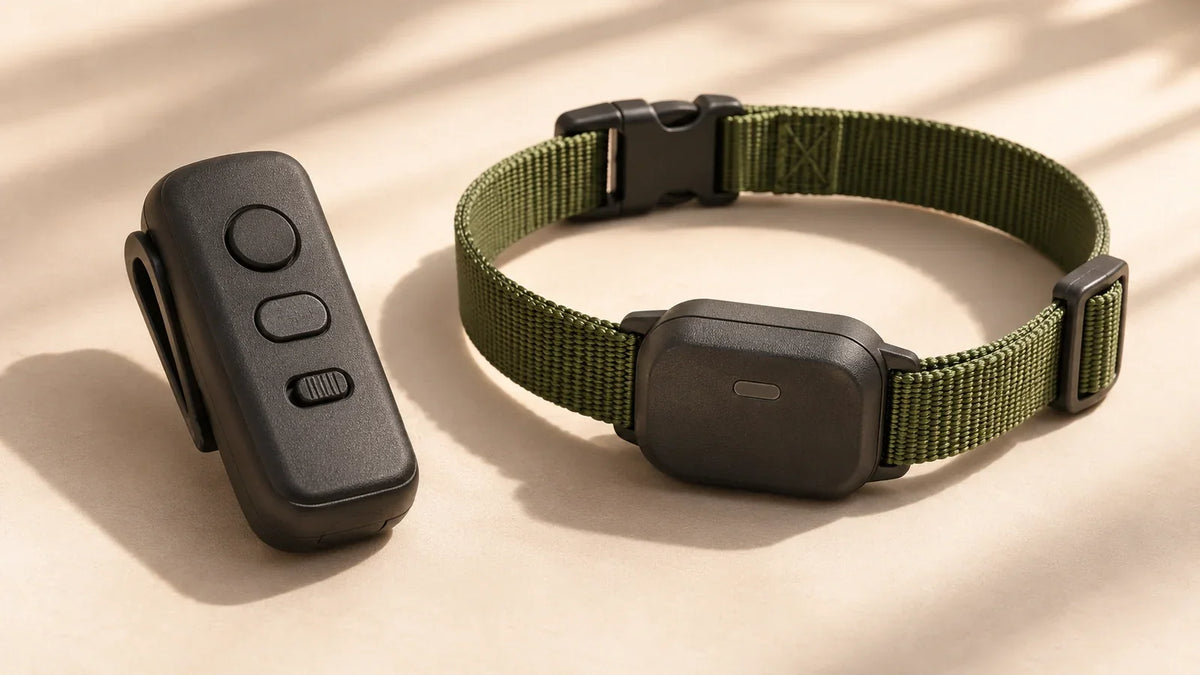
E-Collar Training for Dogs: Benefits, Risks, and How to Choose
Understand E-collar training, compare remote, bark, and boundary collars, and learn what the research, fit checks, and welfare guidance mean for your dog.
November 20, 2026
12 MINS READ
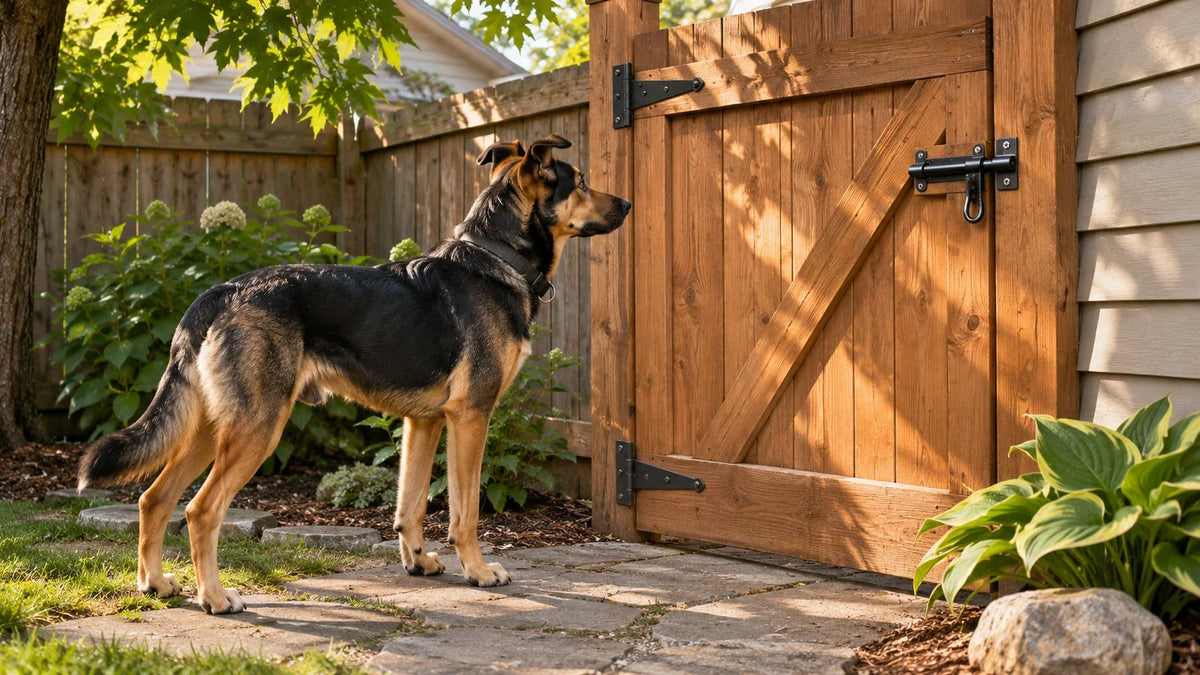
Best Fence for Dogs That Escape: Options by Escape Behavior
Find the best fence for dogs that escape. Compare six options for jumping, climbing, digging, gaps, and gates, plus costs and practical limits.
November 20, 2026
15 MINS READ
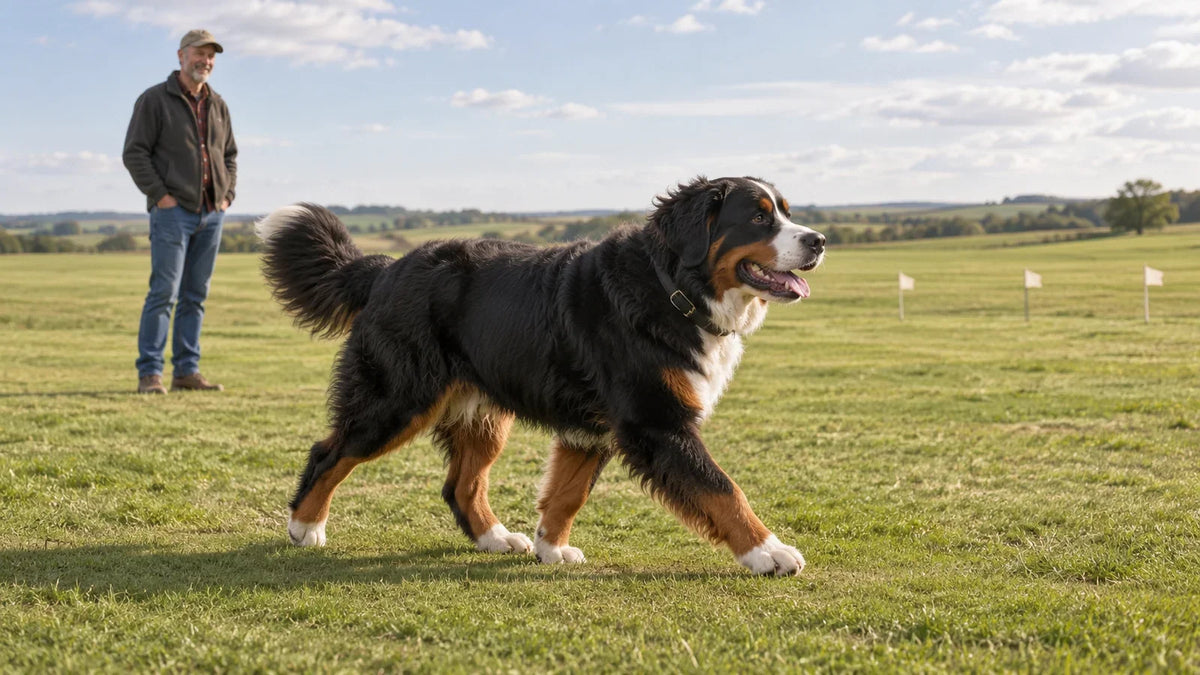
Best Wireless Fence for Large Dogs
The best wireless fence for large dogs, compared on neck fit, acreage, battery and monthly fees, with 5-year costs and a fit check for thick coats.
November 20, 2026
9 MINS READ
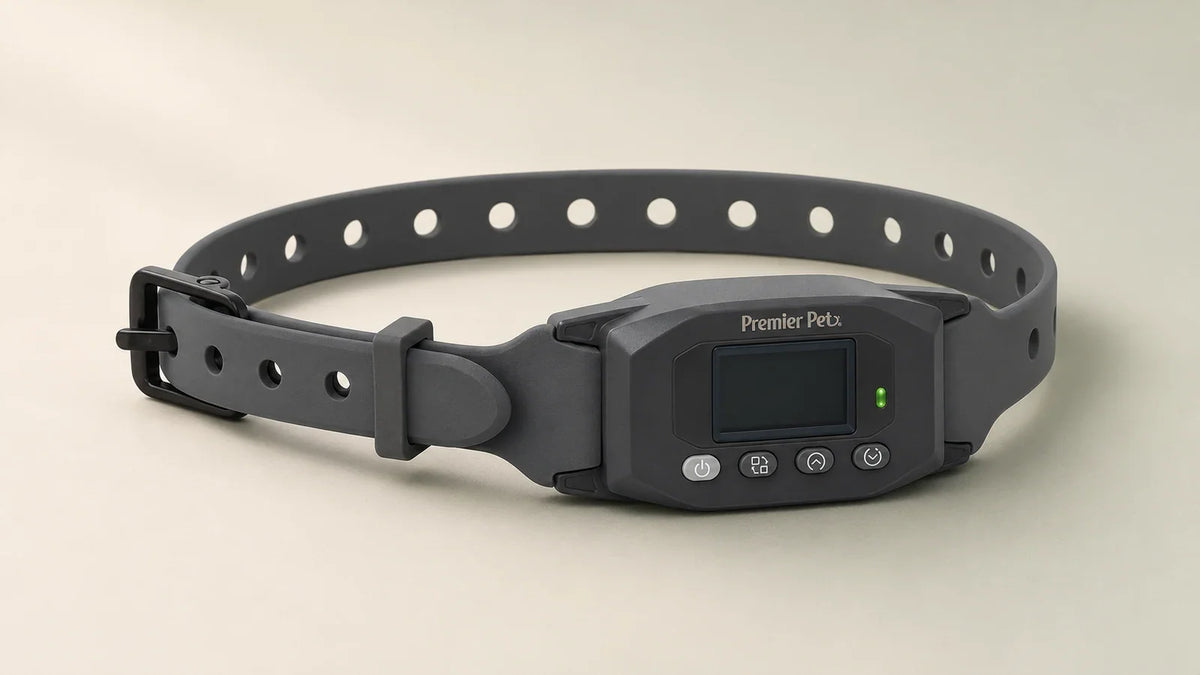
Premier Pet Wireless GPS Dog Fence Collar Review (2026)
Premier Pet wireless GPS dog fence collar review covering setup, accuracy, battery life, costs, and customer feedback. Compare it with PawTronic.
November 20, 2026
13 MINS READ
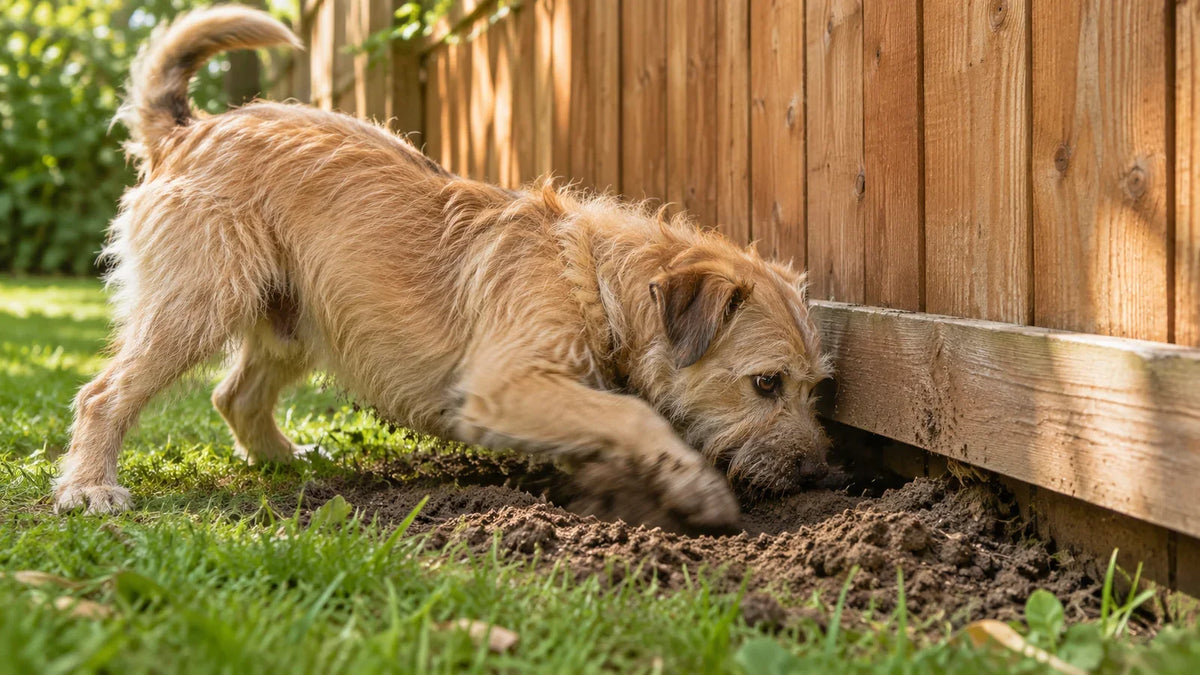
How to Keep a Dog From Digging Under a Fence
How to keep a dog from digging under a fence: a wire apron on the digging side, no-dig panels, pinned blocks at the gate, a dig pit, and real costs.
November 13, 2026
11 MINS READ
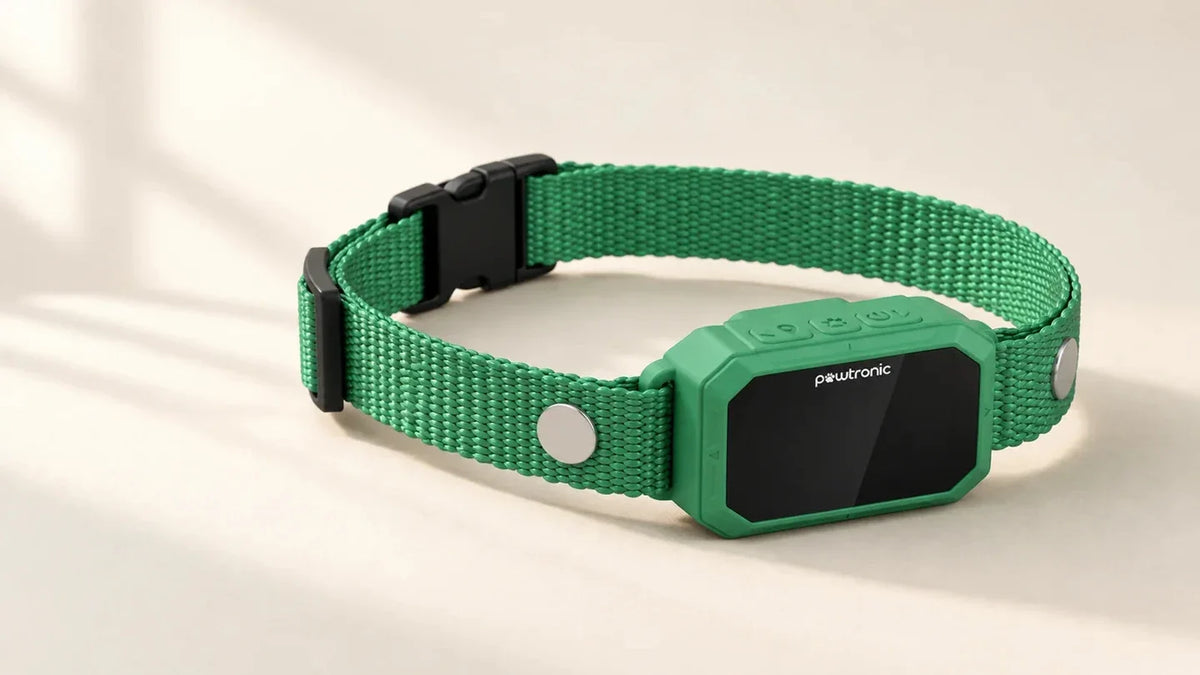
How Does a Wireless Dog Fence Work? Radio vs GPS
Radio and GPS dog fences set boundaries in different ways. See how the collars work, what happens when signals drop, and how to train your dog.

November 06, 2026
20 MINS READ
Best Invisible Dog Fences of 2026: Wireless, GPS and Wired
Compare GPS, wireless radio, and wired dog fences by yard layout, collar fit, subscriptions, training, and three-year cost.
November 06, 2026
9 MINS READ
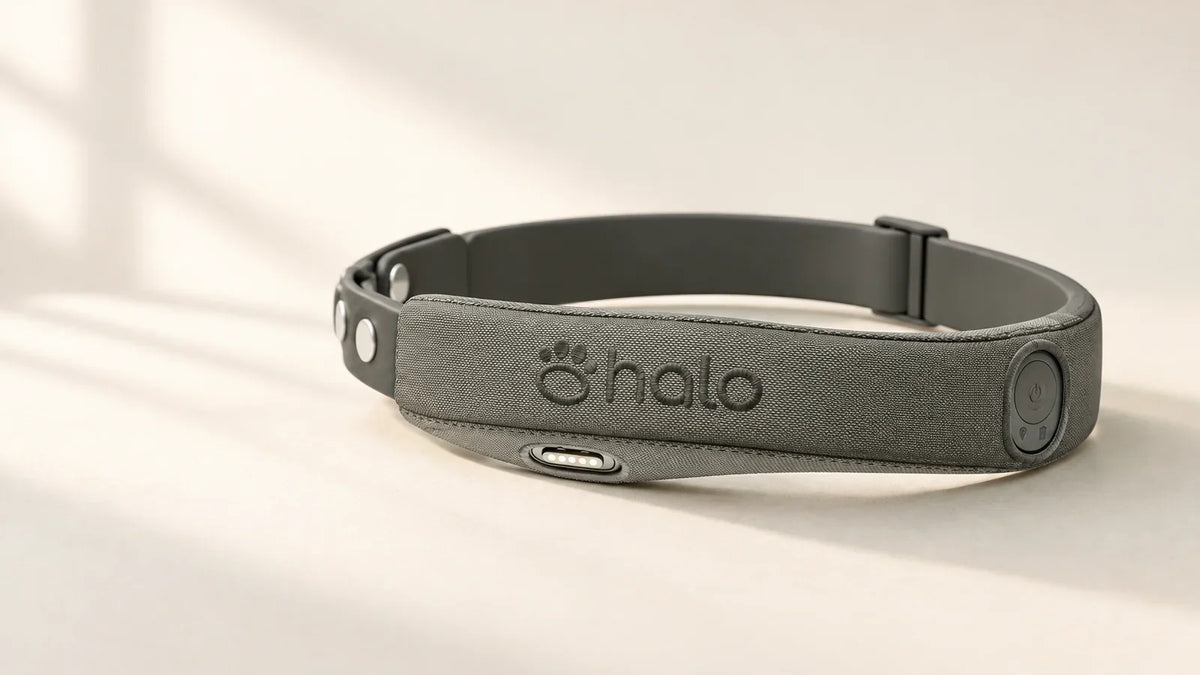
Halo Collar 4 vs 5: What Changed Between the Two Collars
Compare the Halo Collar 4 and 5 by hardware price, charging, GPS features and first-year membership costs before buying or upgrading.
November 06, 2026
13 MINS READ
Best GPS Dog Collars With No Subscription
Find GPS dog collars with no subscription. Compare fence collars, understand tracking limits, and check fit, setup needs, and ownership costs.

November 06, 2026
12 MINS READ
GPS Dog Fence for Multiple Dogs: One Boundary, a Collar per Dog
Compare costs, collar fit, boundary setup and individual training for two or three dogs sharing a GPS dog fence.


Pawtronic Pro
A wireless GPS fence and training collar that helps you create safe outdoor boundaries without buried wire, base stations, or monthly fees.
4 interest-free installments


