

$19.99


E-Collar Training for Dogs: Benefits, Risks, and How to Choose
By: Jeff Smith
November 20, 2026
11 MINS READ
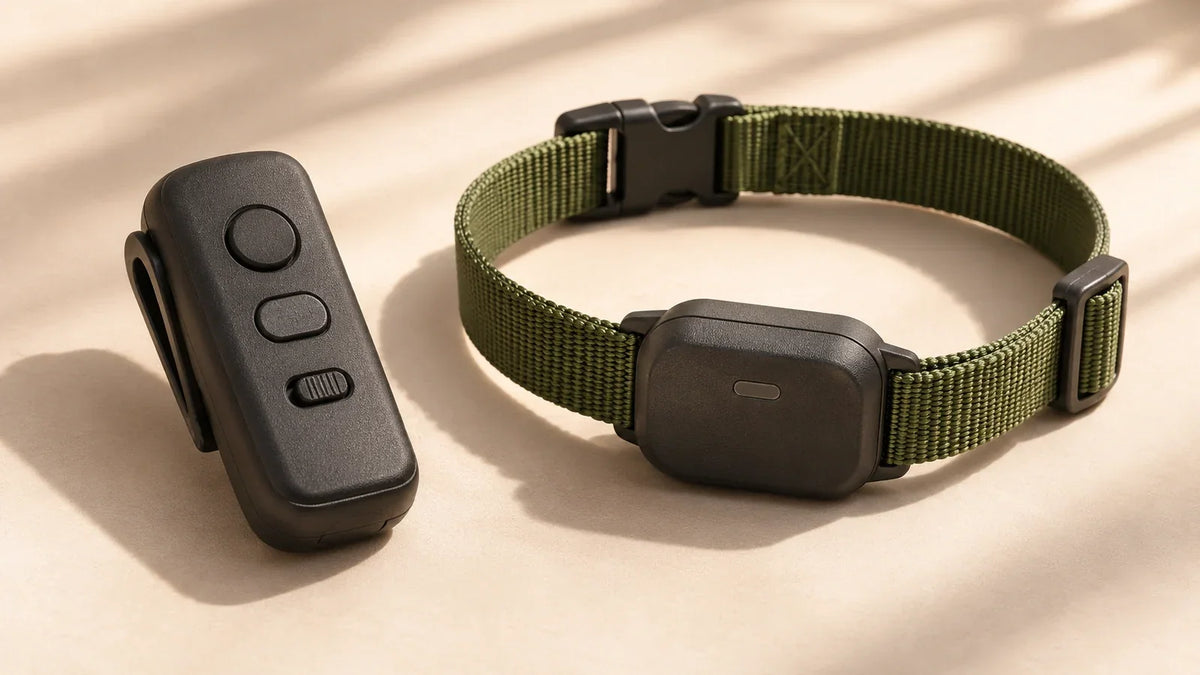
E-collar training uses sound, vibration, or static correction as a signal a dog has to learn.
Remote trainers respond to the handler, bark collars respond to detected barking, and boundary collars respond to a set perimeter.
Start with reward-based training. Before choosing a collar, consider the behavior you want to teach, your dog’s fit and welfare, and the device’s requirements.
A GPS boundary collar can support outdoor containment, though you’ll still need to teach the boundary. PawTronic’s GPS dog fence lets you set that perimeter in a free app, with no monthly subscription for the fence.
E-Collar training uses a collar-mounted device to deliver a sound, vibration, or static cue. The practical capability is sending that cue. Whether it improves learning, suits your dog, or creates welfare concerns requires a separate assessment. I’d start with the behavior you want to teach and a reward-based plan before comparing equipment.
Different collars also serve different jobs. PawTronic’s wireless dog fence, for example, uses a saved outdoor boundary rather than responding to commands, while a handler-operated remote trainer responds to a person’s command. Understanding that distinction matters more than counting settings.
What is an e-collar for dogs?
A dog e-collar is an electronic device worn on a collar that delivers a cue through a receiver. Depending on the model, the cue can be sound, vibration, static correction, or a combination. A person, a bark-detection sensor, or a boundary system can activate it. Those activation methods serve different purposes.
Here, “e-collar” means an electronic collar. Veterinary recovery cones also use that name. Electronic models vary in controls, supported modes, connection requirements, and fit. A handheld remote and an app are control interfaces. Neither tells you how a dog will experience the cue or whether the device fits the problem you’re trying to address.
How does e-collar training work?
E-collar training works through learned associations between a cue, the dog’s behavior, and what follows. A remote trainer lets the handler activate the receiver. The dog must learn what that signal means. Pressing a button doesn’t explain “come,” “sit,” or another behavior the dog hasn’t learned.
The learning process depends on how you use the cue. A tone paired with a reward can become a marker. A cue paired with an unpleasant stimulus can become a warning. When discomfort follows a behavior, it can suppress that behavior. When discomfort ends after a response, that relief can reinforce the response. These are different learning arrangements, even when the same device delivers them.
VCA’s veterinary behavior guidance explains why timing matters. When events don't line up clearly, the dog can learn an association with something other than the intended behavior.
Automatic collars change who controls the trigger. A bark collar responds to its detector. A boundary collar responds to the configured perimeter. The owner still has to assess suitability, understand the equipment, and teach the relevant task.
Which types of electronic collars should I distinguish?
Distinguish remote trainers, automatic bark collars, and electronic boundary collars by what triggers the cue and the task they’re designed to address. Sound, vibration, and static are output options within these categories. They don’t form a separate ranking of effectiveness or suitability.
Collar type |
What triggers it? |
Intended task |
Main limitation |
|---|---|---|---|
Remote trainer |
A handler using a remote or supported app |
Deliver a selected cue during training |
Depends on the handler’s timing, the learned association, and device connection |
Automatic bark collar |
A sensor detecting barking, according to its design |
Responds to detected barking |
Detection doesn’t identify the reason for barking or resolve that cause |
Electronic boundary collar |
Position relative to a wire, transmitter-based boundary, or saved GPS perimeter |
Deliver boundary-related cues |
Requires compatible site conditions and training, and doesn’t physically block escape |
Some devices combine functions. Check the instructions for each mode separately. A product that offers both boundary alerts and nearby manual controls doesn’t make those functions interchangeable.

What are the practical benefits of electronic collars?
Electronic collars offer practical capabilities such as handler-controlled cue delivery and selectable outputs where the model supports them. Those features explain what equipment can do. They don’t establish faster learning, improved welfare, or dependable off-leash behavior. I’d evaluate any claimed training benefit against evidence for the specific task.
The capabilities worth distinguishing are:
- Remote cue delivery: A compatible remote system lets a handler activate a receiver while separated from the dog. That creates another way to deliver a signal within the device’s operating conditions. It doesn’t show that the dog understands the signal, will respond under distraction, or can safely be released from a leash
- Selectable cue modes: Some models let owners select sound, vibration, or combinations that include static correction. These controls determine the output. A choice of modes can support a specified training plan, but the mode name alone can’t establish comfort. A dog’s response and the learned association still matter
- Automatic boundary activation: A compatible fence collar can respond to a configured perimeter without a handler pressing a button for each activation. That is a containment-related function. It still depends on the system’s installation or positioning requirements, the dog’s learning, and the owner’s checks. It provides no physical barrier against escape
- Configurable outdoor layouts: GPS fence models that support saved shapes let owners configure a boundary through an app rather than install boundary wire. This changes the setup task. It doesn’t prove that every property has adequate reception or enough usable space to keep the selected boundary away from hazards
What are the risks and limitations of e-collar training?
E-collar training can raise welfare concerns, create unclear associations, and foster dependence on equipment that doesn’t address the cause of a behavior. Research on remote static-correction training raises concerns but doesn't answer every question about every device. Sound and vibration also require individual assessment. I wouldn’t treat a non-static label as a welfare guarantee.
Welfare findings
In a 2014 study of 63 dogs, Cooper and colleagues reported more tension and yawning in the electronic-collar group than the reward-focused group. Owner-reported improvement didn’t differ significantly across groups. Cortisol findings didn’t show a simple increase attributable to electronic-collar use in the main trial
Effectiveness has a defined scope
China, Mills, and Cooper’s 2020 analysis found advantages for the reward-focused group on some recall and sit measures. It reused recordings from the earlier research project. It wasn’t a second independent trial or a direct test of GPS containment, tone-only training, or every real-world chasing situation
Study design limits interpretation
Published methodological criticism challenged the analysis and how far its conclusions could extend. Different trainers, seasons, and locations complicate comparisons. Dogs also worked mostly on long lines and near trainers. The authors defended their methods. These constraints limit generalization without establishing a benefit for electronic correction
Professional guidance favors rewards
The American Veterinary Society of Animal Behavior recommends reward-based methods for dog training and behavior modification. Its position opposes aversive methods, including electronic collars. Professional supervision shouldn’t be presented as AVSAB approval of static correction. For fear, anxiety, or aggression, seek a veterinary assessment and an appropriate behavior plan
Interpretation and equipment require attention
A collar can deliver a cue without identifying why a dog barked, chased, or failed to respond. Fit, contact-area checks, wearing limits, charging, and required connections also matter. Poorly timed aversive signals can create unintended associations. More settings can’t compensate for an unsuitable task or an unclear training plan.
I’d also separate behavior suppression from resolution. A dog becoming quieter doesn’t establish that fear or distress has improved. Veterinary behaviorists Debra Horwitz and Gary Landsberg explain that punishment can suppress behavior while leaving its motivation unchanged. That distinction matters when the original problem needs treatment.
What should I consider before choosing an e-collar?
Before choosing an e-collar, assess the task, the individual dog, the device’s operating requirements, and the routine you can maintain. A product can meet its published specifications and still be unsuitable for the situation. I’d make those checks before comparing range, settings, accessories, or price.
Use these four criteria:
- The actual task: Write down the behavior or management problem you need to address. Recall practice, barking, and an outdoor boundary involve different triggers and goals. Ask whether reward-based teaching and environmental management address that need. Don’t choose a boundary device merely because it appears in a broad training-collar search
- The individual dog: Check the model’s age, weight, and neck requirements, then consider the dog’s health and behavior with your veterinarian. Meeting the size limits establishes only part of the fit. Fear, pain, skin problems, or aggression need assessment. A manufacturer’s eligibility threshold isn’t an individual welfare clearance
- The device requirements: Read the exact model’s instructions for cue modes, controls, charging, wearing, and signal loss. For GPS boundaries, examine usable outdoor space and reception. For a remote, check the supported connection and controls. Confirm the selected package’s components rather than assuming every pictured accessory comes with it
- The owner’s commitment: Allow for supervised teaching, rewards, equipment checks, charging, and collar removal. Compare the hardware cost with any required subscription, additional receivers, and replacement accessories. Include professional help in your planning. If the routine doesn’t fit your household, a longer feature list won’t remove that practical constraint
What should I do before starting e-collar training?
Before starting e-collar training, assess suitability, teach the desired behavior with rewards, get qualified guidance, and read the exact manual. These checks can lead to a decision to use a different approach. A generic online sequence can’t establish an appropriate correction level, duration, or training plan for an individual dog.
If you’re researching how to train with an e-collar, start with these preparations:
- Assess the problem first: Describe when the behavior happens, what precedes it, and what you want the dog to do instead. Ask your veterinarian about health or behavior concerns before adding equipment. If fear or aggression is involved, seek a veterinary behavior referral rather than trying to suppress the visible response
-
Build reward-based foundations: Teach the desired response in a manageable environment using rewards the dog values. Make the cue and the rewarded behavior clear before increasing difficulty. VCA’s guidance emphasizes the timing of reinforcement. A collar’s activation can’t replace teaching, and an incomplete response isn’t a reason to increase correction

- Choose qualified help: Ask how the professional assesses behavior, teaches the replacement response, and monitors welfare. Request a reward-based plan and an explanation of when to stop or seek veterinary help. A trainer’s willingness to use a device doesn’t establish that the method follows veterinary-behavior guidance or suits your dog
- Check the exact instructions: Review fit, permitted wearing time, maintenance, controls, and the manufacturer’s equipment-testing procedure before putting the system into use. Resolve unclear instructions with the manufacturer. Keep physical management appropriate to the situation. Don’t copy another model’s settings, use a universal static protocol, or test containment beside traffic
When does a GPS boundary collar fit a different need?
I’d consider a boundary system only when you need outdoor containment support, and the site meets its operating requirements. A GPS boundary collar addresses a defined outdoor area. A remote trainer addresses handler-initiated cues during training. That difference changes how you assess the product, the property, and the dog.

What is it?
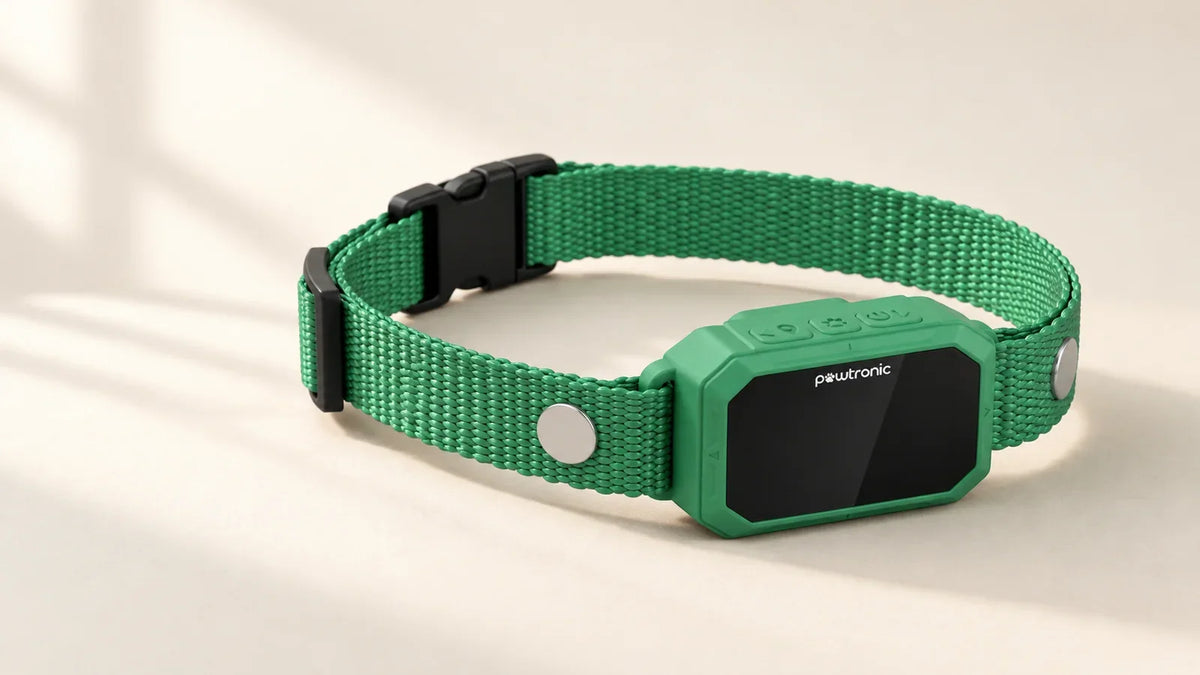
PawTronic Pro Series 2 GPS dog fence is an app-configured GPS boundary collar for outdoor use. Its saved perimeter determines the boundary function. It doesn’t provide remote lost-dog tracking. PawTronic also supports app-controlled training and an optional paired remote. Those functions operate separately from the saved automatic boundary.
How does it work?
Configure a circle or custom eight-sided polygon in the app and save it to the collar. The boundary operates without a continuous phone connection after setup. The manufacturer lists sound, vibration, sound plus vibration, and sound plus vibration plus static correction. Check the layout outdoors before training the boundary.
What I’d keep in mind
Confirm the fit before you buy. The published requirements are a dog over six months old, at least 7.9 lb, with an 8–25-inch neck, and GPS reception and usable layout matter as much as acreage. The circular radius starts at 82 feet. The receiver’s 36-hour figure describes GPS standby, so plan charging around your actual use.
Plan the wearing routine. The manufacturer’s instructions specify no more than 12 hours of wear daily, repositioning every 1–2 hours, and daily contact-area checks, and they prohibit use on aggressive dogs. Don’t attach a leash to the receiver collar.
Work out the full package total before ordering: the hardware package plus a receiver for each dog, with any optional remote and replacement accessories confirmed separately.
Like any GPS boundary, it creates a virtual perimeter rather than a physical one, so keep your dog securely contained anywhere the surroundings aren’t safe. Where your dog meets the requirements and your site has reliable reception, PawTronic gives you an app-configured outdoor boundary you can set up and adjust yourself.
Frequently Asked Questions About E-Collar Training for Dogs
Are e-collars and shock collars the same?
A shock collar is an e-collar that delivers an electrical stimulus, often called static correction, while an e-collar is a broader term that can also include models that use sound or vibration. Check the model’s specifications to see which signals it delivers and whether a remote, a bark sensor, or a boundary triggers them.
Can I use an e-collar without static correction?
Yes, some e-collars let you select a sound-only or vibration-only mode. Check the model’s manual to confirm how to select the mode and whether it stays active after a restart or mode change. Pay attention to how the dog responds. A tone or vibration can still be unpleasant or startling to an individual dog.
Can an e-collar replace basic obedience training?
No, an e-collar can’t replace basic obedience training. A dog learns what a cue means through practice and reinforcement. Start with reward-based training in a setting with few distractions, then build up gradually as the dog learns the behavior. If progress stalls, a qualified reward-based trainer can help assess the cue, timing, and training setup.
Does a GPS fence collar track a lost dog?
No, a GPS fence collar uses GPS to hold a boundary, not to send your dog’s location to your phone. Some products add live tracking through separate connectivity or a paid service, but PawTronic Pro Series 2 is a fence-only product and doesn’t provide remote lost-dog tracking. If you need live location, confirm that capability, its coverage, and any required plan on the specific product before relying on it.
Related Articles

November 20, 2026
12 MINS READ
Best Fence for Dogs That Escape: Options by Escape Behavior
Find the best fence for dogs that escape. Compare six options for jumping, climbing, digging, gaps, and gates, plus costs and practical limits.

November 20, 2026
15 MINS READ
Best Wireless Fence for Large Dogs
The best wireless fence for large dogs, compared on neck fit, acreage, battery and monthly fees, with 5-year costs and a fit check for thick coats.
November 20, 2026
9 MINS READ
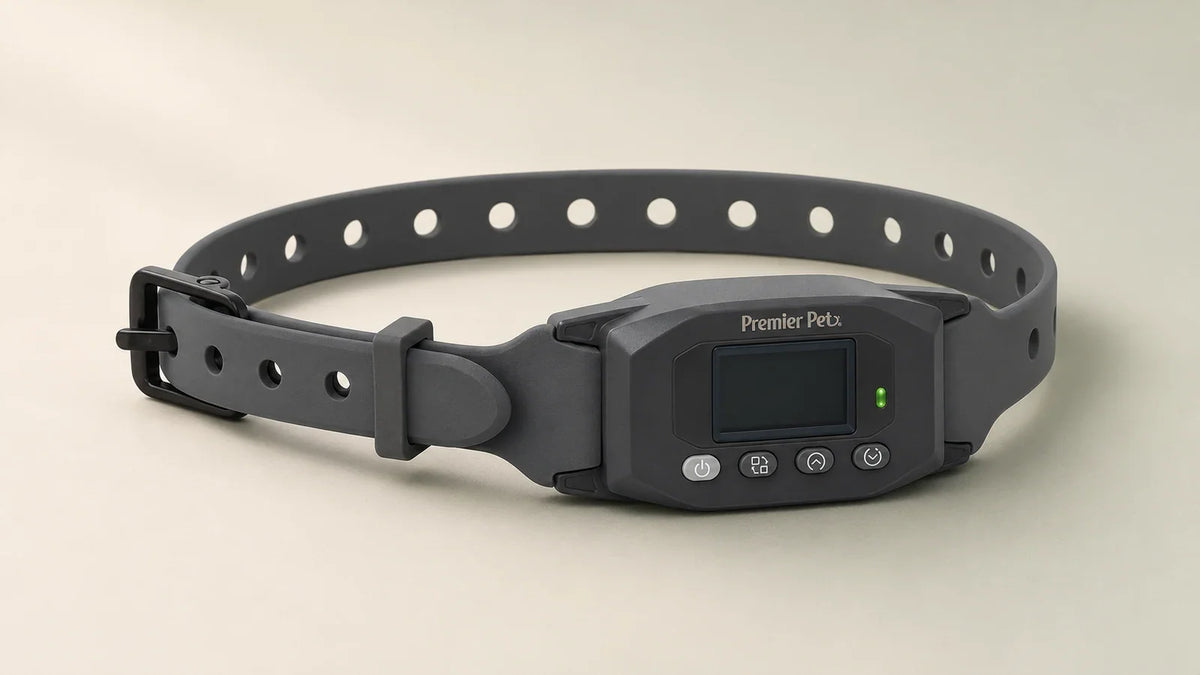
Premier Pet Wireless GPS Dog Fence Collar Review (2026)
Premier Pet wireless GPS dog fence collar review covering setup, accuracy, battery life, costs, and customer feedback. Compare it with PawTronic.

November 20, 2026
13 MINS READ
How to Keep a Dog From Digging Under a Fence
How to keep a dog from digging under a fence: a wire apron on the digging side, no-dig panels, pinned blocks at the gate, a dig pit, and real costs.
November 13, 2026
11 MINS READ
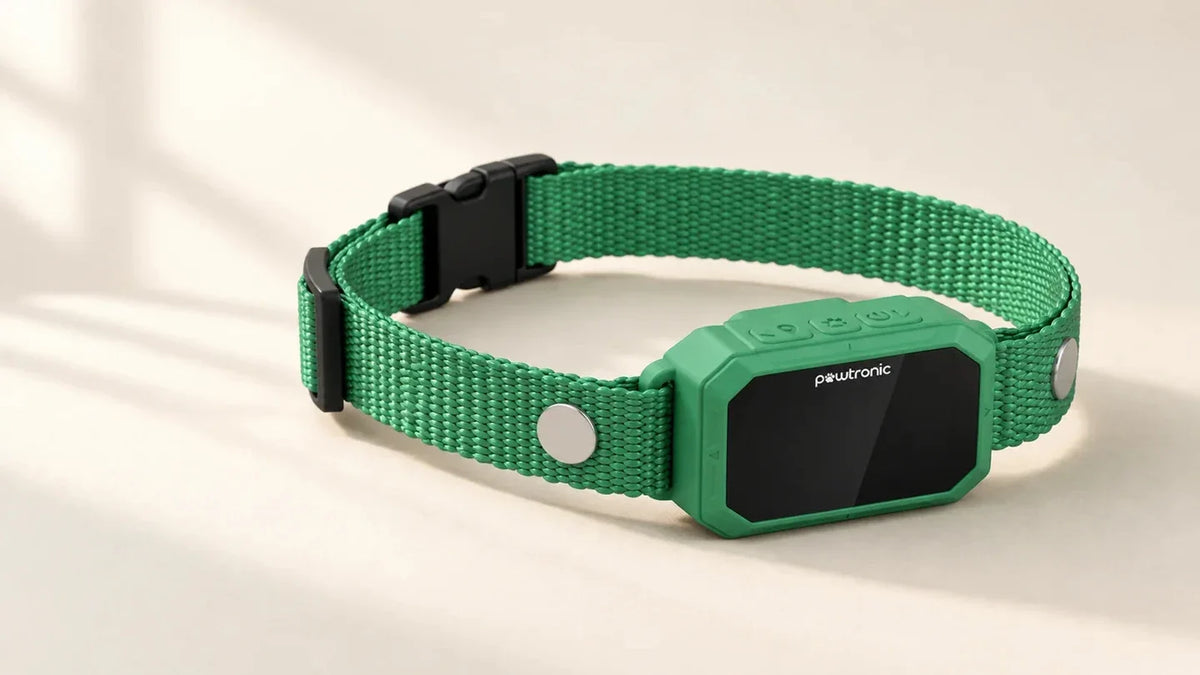
How Does a Wireless Dog Fence Work? Radio vs GPS
Radio and GPS dog fences set boundaries in different ways. See how the collars work, what happens when signals drop, and how to train your dog.

November 06, 2026
20 MINS READ
Best Invisible Dog Fences of 2026: Wireless, GPS and Wired
Compare GPS, wireless radio, and wired dog fences by yard layout, collar fit, subscriptions, training, and three-year cost.
November 06, 2026
9 MINS READ
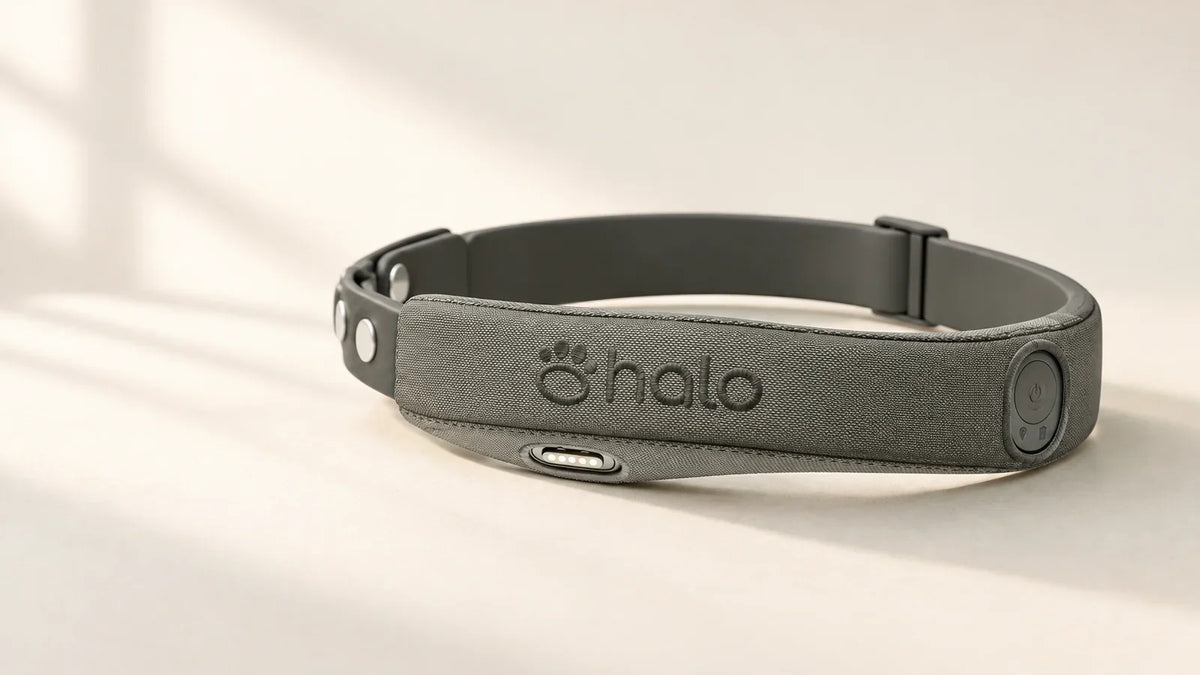
Halo Collar 4 vs 5: What Changed Between the Two Collars
Compare the Halo Collar 4 and 5 by hardware price, charging, GPS features and first-year membership costs before buying or upgrading.
November 06, 2026
13 MINS READ
Best GPS Dog Collars With No Subscription
Find GPS dog collars with no subscription. Compare fence collars, understand tracking limits, and check fit, setup needs, and ownership costs.

November 06, 2026
12 MINS READ
GPS Dog Fence for Multiple Dogs: One Boundary, a Collar per Dog
Compare costs, collar fit, boundary setup and individual training for two or three dogs sharing a GPS dog fence.

November 06, 2026
15 MINS READ
Best GPS Dog Fences Without a Subscription in 2026
Compare four GPS dog fences without subscription fees, including hardware prices, optional tracking, dog-fit limits, and property requirements.


Pawtronic Pro
A wireless GPS fence and training collar that helps you create safe outdoor boundaries without buried wire, base stations, or monthly fees.
4 interest-free installments


