

$19.99


How to Keep a Dog From Digging Under a Fence
By: Jeff Smith
November 20, 2026
13 MINS READ
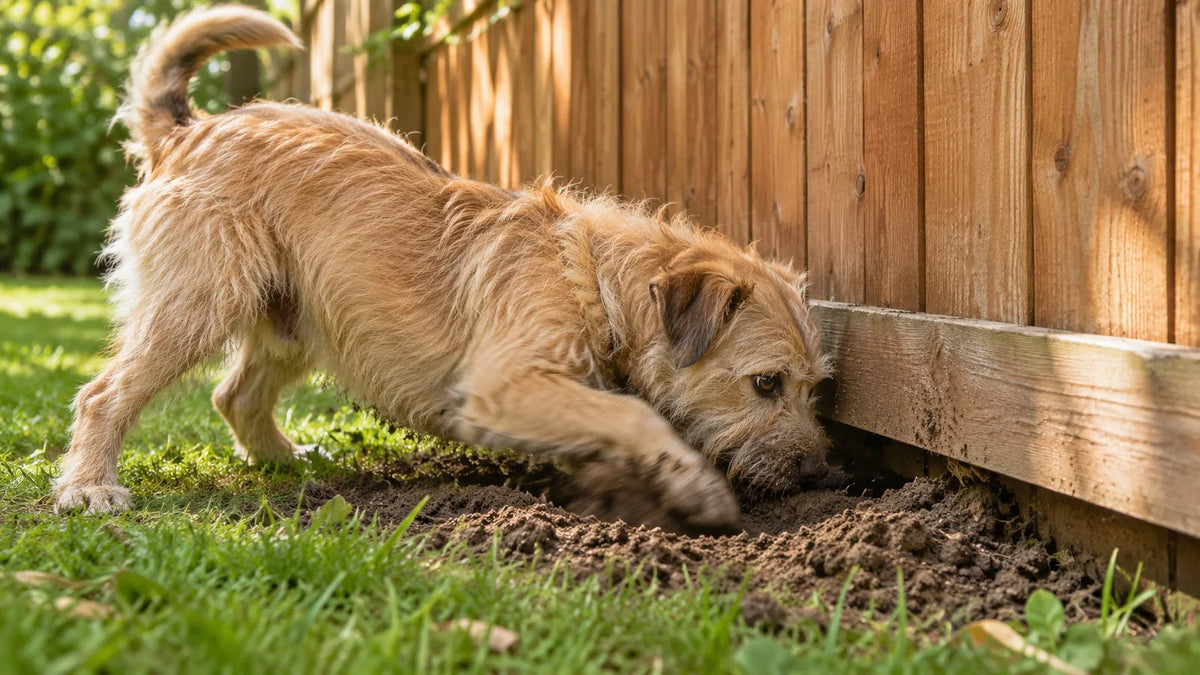
To keep a dog from digging under a fence, fix metal along the fence base on the side where the digging starts, so paws hit wire or steel instead of dirt. Pin down anything loose, because a strong dog will move it, and give the dog a better place to dig.
- Find out why and where the dog digs
- Lay an L-shaped wire apron on the digging side
- Drive in no-dig panels where trenching won't work
- Pin heavy blocks in place at the gate and hot spots
- Give the dog a better place to dig
- Walk the fence line and refill new holes with rock
A new owner lined the bottom of a 6-foot privacy fence with cinder blocks, bricks, 2x4s, and rocks. The dog, a 60 lb boxer mix from a shelter, pulled every one of them away. Her owner called that amazing on r/DIY "for a creature without opposable thumbs."
If that sounds like your yard, you've learned the first lesson already. Anything your dog can move, your dog will move. The fix has to sit in the ground, on the side the digging starts.
On a long fence line, that gets expensive fast. If your own dog is the digger, our GPS dog fence lets you set a second boundary well inside the fence line, with no monthly fee to keep it on.
Step 1: Find out why and where the dog digs
Finding out why and where the dog digs takes a week and a note on your phone. Log the time, the weather, and the spot of each new hole.
If there's already a hole your dog can fit through, close it before you start the log. Pack it with large rock, and keep your dog on a leash or indoors between supervised trips outside.
After a week, the pattern tells you where to start. Here's how to read it:
- Hot afternoons, same shady spot, no escape: your dog wants a cool bed. Go to Step 5 first.
- Holes spread along a long stretch: your dog wants out. Go to Steps 2 and 3.
- Holes at the gate or one low corner: go to Step 4.
- Digging where your dog can see out: what a dog sees through the fence can set off the digging. Swap the see-through sections for solid panels.
- Frantic digging that starts the moment you leave: that points to separation anxiety. Talk to your vet or a certified trainer before you buy hardware.
The reason matters as much as the spot. The veterinary behaviorists at VCA Animal Hospitals warn that blocking all digging without dealing with the dog's motivation "could result in new behavior problems," such as chewing or barking.
While you're out there, measure the fence line you'll treat. Mark any stretch where a spade won't go, such as paving, big roots, or rock. Every later step needs those two notes.
This step is done when you can point to the spot and name the reason. The common mistake is buying steel for a dog who only wanted shade. Some dogs dig a cool hole to lie in and have no interest in the other side.
Step 2: Lay an L-shaped wire apron on the digging side
An L-shaped wire apron is welded wire fixed to the bottom of the fence, with the rest run flat along the ground on the digging side. When the dog digs at the fence, paws land on metal.
For your own dog digging out, the flat part goes inside the fence. The rule is simple: it goes where the digger stands.

Bury the flat part about a foot deep and run it out a foot or more from the fence, the size Humane World for Animals gives for an L-footer. Call 811 before you trench (the FAQ below has the details).
Three wires come up for this job:
- Chicken wire: light, flexible, and easy to bend, but the weakest of the three.
- Welded wire: steel wires welded at each crossing, so it holds its shape. This is the one to buy for a dog.
- Hardware cloth: a mesh with smaller openings, made for small animals and tight spots.
We'd skip chicken wire for any dog with some muscle. One r/DIY owner has a Dogue de Bordeaux (DDB), a Beagle, and a Min Pin: "The DDB is the muscle, the Beagle is the instigator, and the Min Pin is the scout." Those three chewed through a chicken wire apron or ripped it off the fence.
Fasten the top edge every 12 inches. Use staples on a wood fence, and UV-resistant zip ties on chain link or metal.
For a vinyl fence you won't drill, or rocky soil, lay the apron on top of the ground. It doesn't have to be buried to work. Pin it with landscape staples, then cover it with soil or mulch, or let grass grow through.
Turn every cut edge away from the dog and bury it, since exposed wire can hurt a digging paw. Then pick up the clipped bits of wire before the dog finds them first.
The sign it's working is fresh digs that stop dead at the wire.
Step 3: Drive in no-dig panels where trenching won't work
No-dig panels are rows of galvanized steel spikes that you hammer into the ground at the fence base. There's no trench, which helps in hard clay or a yard you don't want torn up.
Dig Defence makes these panels. Here are the sizes of its Large Animal Barrier:
- Each unit is 10 inches high and 32 inches long, with 2.5 inches between tines.
- One unit protects 3 feet of fence when set beside others.
- A 4-count pack covers 12 feet, a 10-count covers 30 feet, and a 25-count covers 75 feet.
The Small/Medium version is 8 inches deep with 2 inches between tines, so match the spacing to the dog. Dig Defence sells the Large 10-pack for $116.54 and the Large 25-pack for $251.99.
Drive each panel down until the top sits level with the soil, tight against the fence bottom. Daylight under a panel is the fault to look for.
The catch is cost over distance. At 3 feet a panel, 300 feet of fence takes 100 panels, which is about $1,008 in 25-packs.
The better plan is panels at the problem spots only. Pair that with wire for the long runs, and let your Step 1 log find the spots.
Step 4: Pin heavy blocks in place at the gate and hot spots
Heavy blocks hold only once they're pinned in place, with rebar or stakes driven through or beside them into the ground. To a strong dog, a loose block is a puzzle and a pinned one is a wall. Here are four ways to do it:
- Rebar and blocks: hammer 3 to 4 foot lengths of rebar into the dirt a few inches from the fence, then set bricks or concrete blocks over them. Cap any rebar ends left showing.
- Railroad ties: line the fence bottom with ties and stake them with rebar every 20 inches. It's back-breaking work.
- Crushed rock: dig a trench at least a foot deep and a foot wide along the fence, then fill it with crushed rock.
- Flat blocks: lay 8-by-16-inch concrete blocks end to end, right up to the fence. As a bonus, they keep the weeds down along the fence line.
Under a gate, look at the gate first. A sagging gate or a loose hinge can be what opened the gap. For what's left, set pavers level in the soil under the gate, low enough that it still swings and latches.
Keep everything flat and low. A stack of blocks is a step, and a dog who can climb it has a new way out. Our guide to keeping a dog from jumping the fence covers that side of the problem.
It's holding when nothing has shifted after a week of trying. The mistake is skipping the pins. A dog strong enough to dig is strong enough to drag.
Step 5: Give the dog a better place to dig
A better place to dig is a dig pit: a sandbox or a patch of soft, loose dirt in a shady corner, set well away from the fence. That gives the urge somewhere to go.
Make the pit worth the trip. Bury toys or treats there, lightly covered at first and deeper as your dog gets the idea.

One owner on r/HomeImprovement made it a game. When the dog digs in the wrong spot, the owner walks her to a dirt pile in the corner of the yard and digs with her.
"She LOVES it and digs until she tires out," the owner writes. It may be the one chore in this guide your dog wants to help with.
A dog digging for a cool bed needs a cool place to rest, with plenty of shade and water. Give it that, and the fence stops being the coolest dirt in the yard.
Boredom gets the blame a lot, and our guide to exercise and mental stimulation for dogs has ways to fill the day. Still, exercise alone doesn't fix every dog. The boxer had a very large yard and "plenty of exercise," and she dug anyway.
That's why the barriers come first. The pit is winning when it gets more holes than the fence line.
Step 6: Walk the fence line and refill new holes with rock
Walk the whole fence line once a week, and refill any new hole with large rock instead of soil. Check again after heavy rain, which can wash soil out from under the fence. Stay in the yard with the dog while a new barrier is still being tested.
Rock is harder to dig than loose fill. A cruder trick works for some owners: put the dog's own poop in the hole before covering it. It's a gross chore, and it protects that one spot and nothing else.
Use the walk to train, too. When your dog drops its head to dig at the fence, interrupt with a calm cue such as "leave it." Lead the dog to the dig pit and reward it there.
Skip the scolding. To a dog, attention of any kind can be a reward, so punishing the digging can end up reinforcing it.
Watch the ends of the barrier and any gap you missed, since some dogs treat a barrier as a challenge. One Rottweiler in an r/DIY thread "just kept digging deeper," and her owner thinks she enjoyed it.
Her trips out ended at the school bus stop, where she counted the kids and came home. Sweet, but she's exactly the dog who finds the one gap you missed.
The job is done when a few weeks pass with no fresh dirt at the fence. If holes keep showing up at one spot, go back to Step 3 for that stretch.
How do I stop a neighbor's dogs from digging under the fence?
To stop a neighbor's dogs from digging under the fence, use a barrier that goes straight down on your side. A flat apron belongs on the side where the digger stands, and with a neighbor's dogs that side isn't yours.
These three fixes work from your side:
- A buried curtain: sheet steel, stiff wire, or hog panels set upright in a trench, with the bottom edge buried. Sheet steel rusts out in time, so treat it as a stopgap.
- Drive-in panels: hammered in along your side of the fence, with no trench and nothing on the neighbor's land.
- Screen and gravel in each hole: lay 1/4-inch metal screening in the hole and put gravel on top. One owner did this hole by hole, and after about 20 feet of fence the dogs gave up.
Until the barrier is in, go out with your own dogs. Small dogs are the ones at risk when bigger dogs get in, and no barrier stands in for you being there.
What is the cheapest way to keep a dog from digging under a fence?
The cheapest way to keep a dog from digging under a fence is to treat only the stretch your dog works, and to use welded wire rolls for anything long. At WeldedWireFence.com, wire costs $2 to $4 per foot of fence. Dig Defence's Large panels come to about $3.36 a foot in 25-packs.
Here's the math for 300 feet of fence, with each roll used at its full 4-foot width:
What you buy |
Good to know |
Price |
Fence covered |
300 feet of fence |
|---|---|---|---|---|
4" x 4" 11-gauge PVC-coated welded wire, 48 in x 100 ft |
Lowest cost per foot, widest squares |
$200 a roll |
100 ft |
$600 (3 rolls) |
3" x 3" 11-gauge PVC-coated welded wire, 4 ft x 50 ft |
Mid-size squares |
$150 a roll |
50 ft |
$900 (6 rolls) |
2" x 2" 11-gauge PVC-coated welded wire, 4 ft x 50 ft |
Tightest squares of the three |
$200 a roll |
50 ft |
$1,200 (6 rolls) |
Dig Defence Large Animal Barrier, 25-pack |
No trench, suits hard ground and hot spots |
$251.99 a pack |
75 ft |
$1,007.96 (4 packs) |
Wire needs staples or zip ties on top of that. Pavers and blocks are priced by the piece, and the bill climbs fast once you need 50 or 100 of them.
Few yards need all 300 feet. Start where your log shows holes and add from there.
A rule for any dog that digs under a fence
The rule works on any fence: put something the dog can't move where the digging starts, and give the urge somewhere else to go.
Everything above follows from it. Wire or panels go where the paws land, and blocks count only once they're pinned. A dog digging for shade gets shade, not steel.
Start with the week of notes, and let them pick your barrier. If you want a backup layer behind it for your own dog, see how a GPS boundary is set up.
Frequently Asked Questions About Dogs Digging Under Fences
How do you keep a dog from digging under a fence?
You keep a dog from digging under a fence by giving its paws metal instead of dirt at the fence base. Lay welded wire in an L along the bottom on the digging side, or drive steel panels into the ground there.
Pin any blocks with rebar. Then add a dig pit and refill new holes with rock.
What can I put down to stop a dog digging under a fence?
Welded wire, drive-in steel panels, and pinned blocks are what to put down to stop a dog digging under a fence. Wire laid flat on the digging side costs the least per foot. Panels suit ground you can't trench, and blocks suit a gate or one hot spot.
Loose bricks, planks, and rocks don't hold, because a strong dog can drag them away.
What smell stops a dog from digging under a fence?
No smell is a sure way to stop a dog from digging under a fence. Cayenne and black pepper are hit or miss, and they need topping up every two to three weeks.
One owner on r/Dogtraining with 3/4 of an acre fenced found the amount of cayenne needed "massive," and it "did nothing to deter him."
Citrus peels are the gentler thing to try. Leave coffee grounds out of it: Pet Poison Helpline warns that swallowing unused grounds could cause serious toxicity in dogs.
How do I stop a dog from digging under a chain link fence?
To stop a dog from digging under a chain link fence, tie a welded wire apron to the bottom of the mesh and run it flat on the digging side. Use UV-resistant zip ties every 12 inches, or hog rings for a stronger hold. Pick squares too small for your dog's paw to pass through.
Add drive-in panels where the ground is too hard to trench.
Will frost push a buried barrier up and damage the fence?
Yes, frost can heave a rigid barrier wedged right under a fence, and damage the fence with it.
Where winters freeze the ground, don't jam blocks, pipe, or timber tight against the fence bottom. Check that stretch each spring.
Is an electric wire or an electronic boundary fence safe for a digger?
A store-bought electronic boundary fence suits some diggers and not others, and a homemade electric wire is a far riskier thing. Not every dog responds well to static correction, so ask a trainer or your vet first.
Don't rig a wire yourself. One owner tells of a yard wire run off a neon-sign transformer, and of a small Scottie stuck on it until the plug was pulled.
Do I need to call 811 before I bury wire along my fence?
Yes, call 811 before you trench, even for a small job. The federal pipeline safety office says every state requires a call 48 to 72 hours before digging.
The utility companies then mark their lines. The call and the marking are free, and it keeps your spade out of a gas or power line.
Do buried balloons stop a dog from digging?
A popping balloon may startle a dog, and the pieces need to be picked up before the dog finds them. A dog trying to escape may simply dig somewhere else.
Secure the gap with a fixed barrier and give your dog a separate place to dig.
Related Articles
November 20, 2026
11 MINS READ
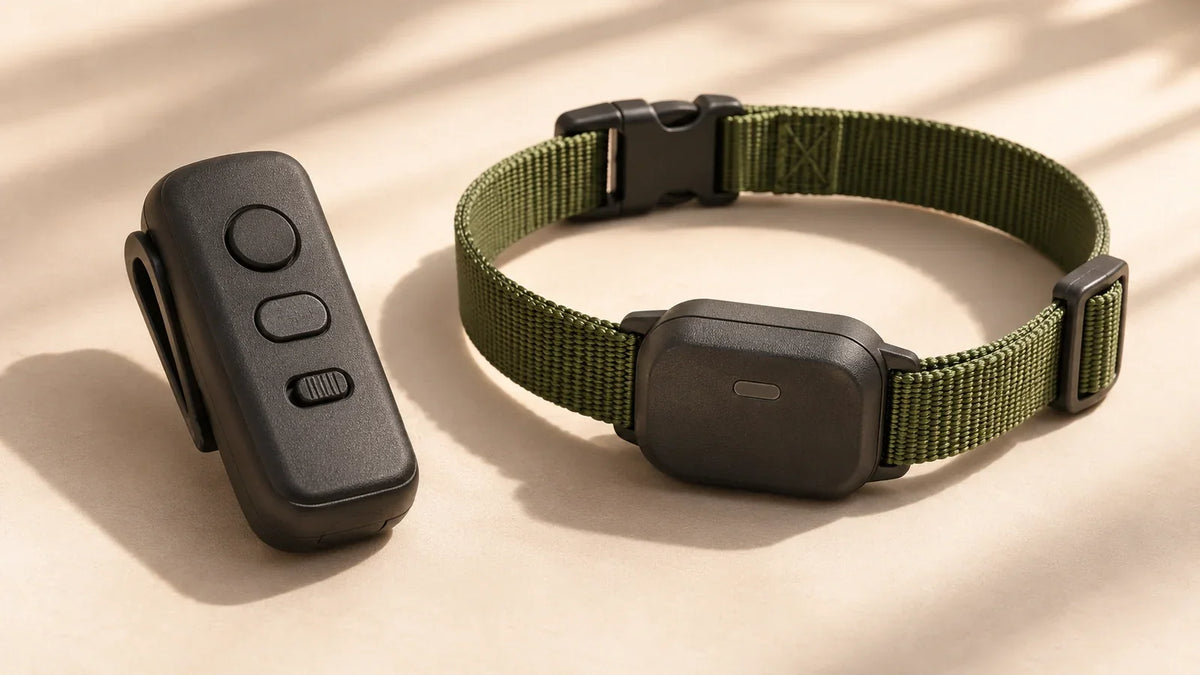
E-Collar Training for Dogs: Benefits, Risks, and How to Choose
Understand E-collar training, compare remote, bark, and boundary collars, and learn what the research, fit checks, and welfare guidance mean for your dog.
November 20, 2026
12 MINS READ
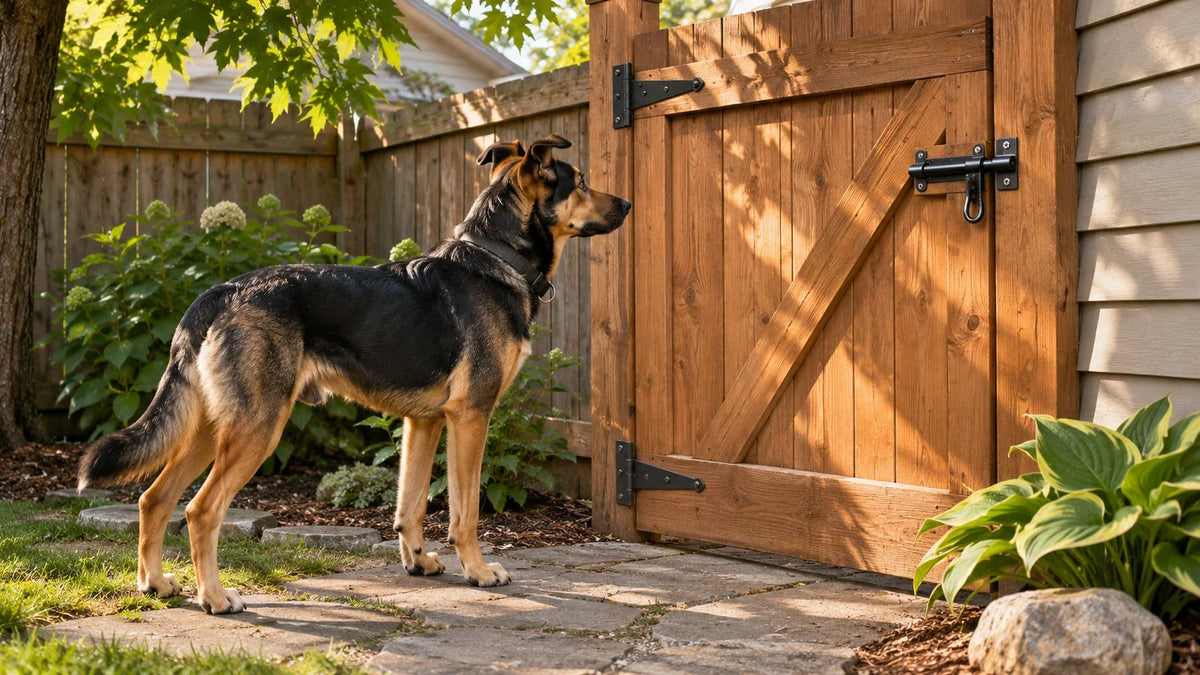
Best Fence for Dogs That Escape: Options by Escape Behavior
Find the best fence for dogs that escape. Compare six options for jumping, climbing, digging, gaps, and gates, plus costs and practical limits.
November 20, 2026
15 MINS READ
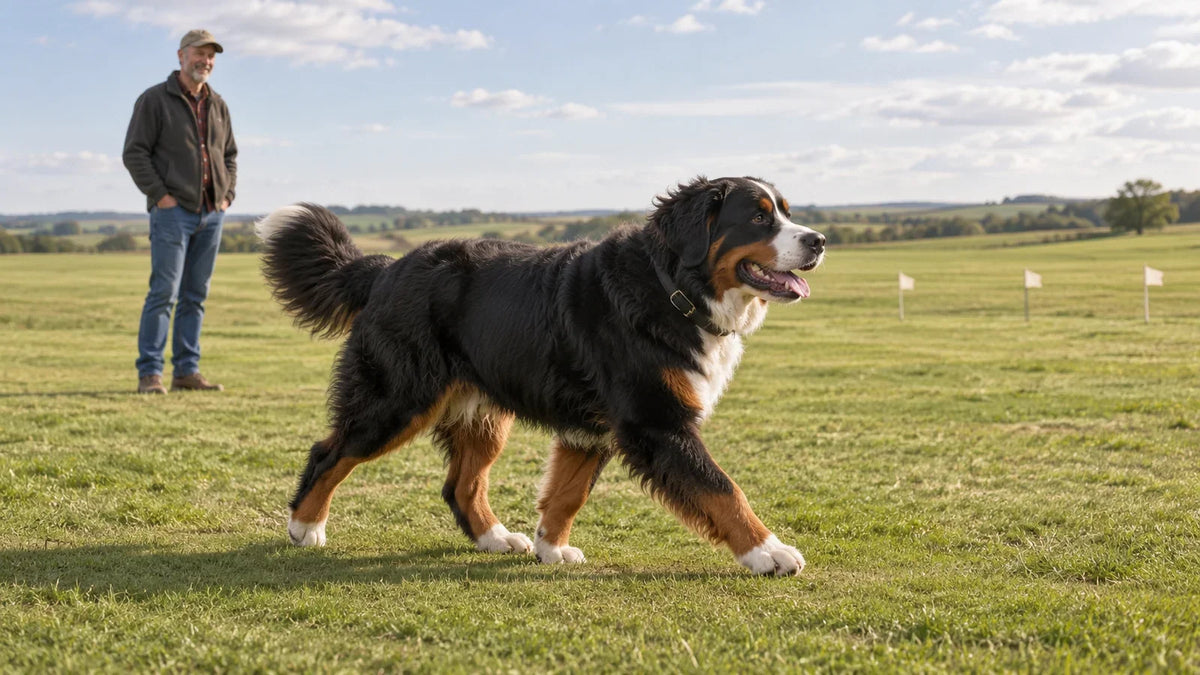
Best Wireless Fence for Large Dogs
The best wireless fence for large dogs, compared on neck fit, acreage, battery and monthly fees, with 5-year costs and a fit check for thick coats.
November 20, 2026
9 MINS READ
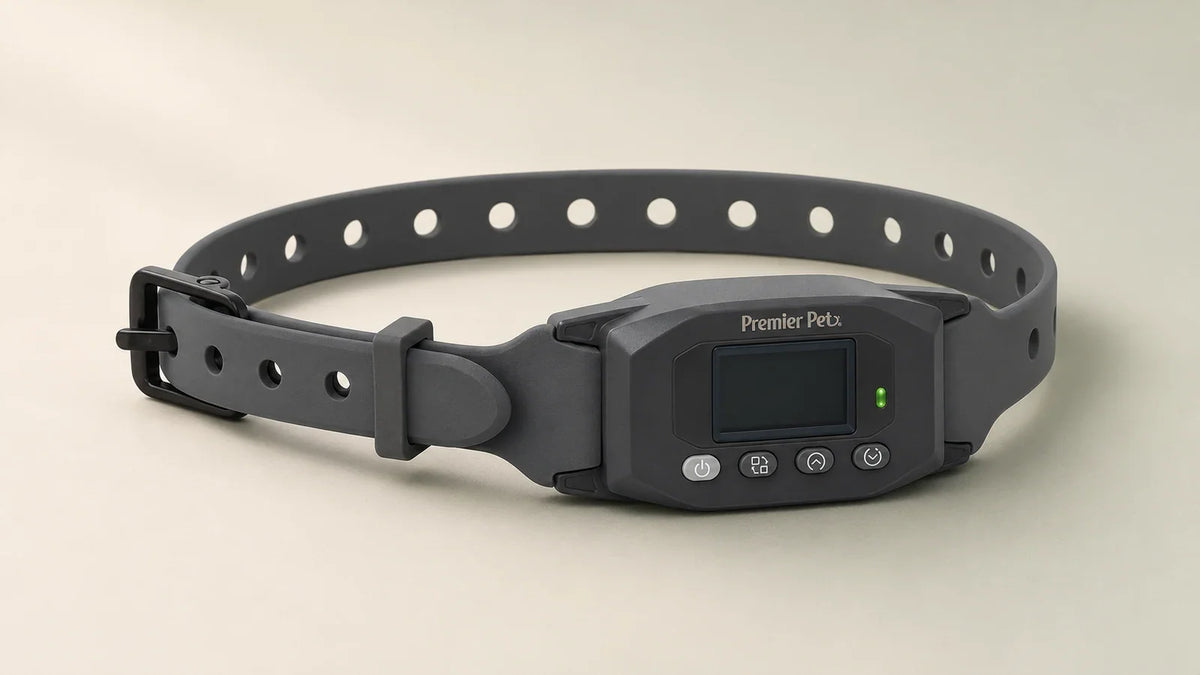
Premier Pet Wireless GPS Dog Fence Collar Review (2026)
Premier Pet wireless GPS dog fence collar review covering setup, accuracy, battery life, costs, and customer feedback. Compare it with PawTronic.
November 13, 2026
11 MINS READ
How Does a Wireless Dog Fence Work? Radio vs GPS
Radio and GPS dog fences set boundaries in different ways. See how the collars work, what happens when signals drop, and how to train your dog.

November 06, 2026
20 MINS READ
Best Invisible Dog Fences of 2026: Wireless, GPS and Wired
Compare GPS, wireless radio, and wired dog fences by yard layout, collar fit, subscriptions, training, and three-year cost.

November 06, 2026
9 MINS READ
Halo Collar 4 vs 5: What Changed Between the Two Collars
Compare the Halo Collar 4 and 5 by hardware price, charging, GPS features and first-year membership costs before buying or upgrading.
November 06, 2026
13 MINS READ
Best GPS Dog Collars With No Subscription
Find GPS dog collars with no subscription. Compare fence collars, understand tracking limits, and check fit, setup needs, and ownership costs.

November 06, 2026
12 MINS READ
GPS Dog Fence for Multiple Dogs: One Boundary, a Collar per Dog
Compare costs, collar fit, boundary setup and individual training for two or three dogs sharing a GPS dog fence.

November 06, 2026
15 MINS READ
Best GPS Dog Fences Without a Subscription in 2026
Compare four GPS dog fences without subscription fees, including hardware prices, optional tracking, dog-fit limits, and property requirements.


Pawtronic Pro
A wireless GPS fence and training collar that helps you create safe outdoor boundaries without buried wire, base stations, or monthly fees.
4 interest-free installments


